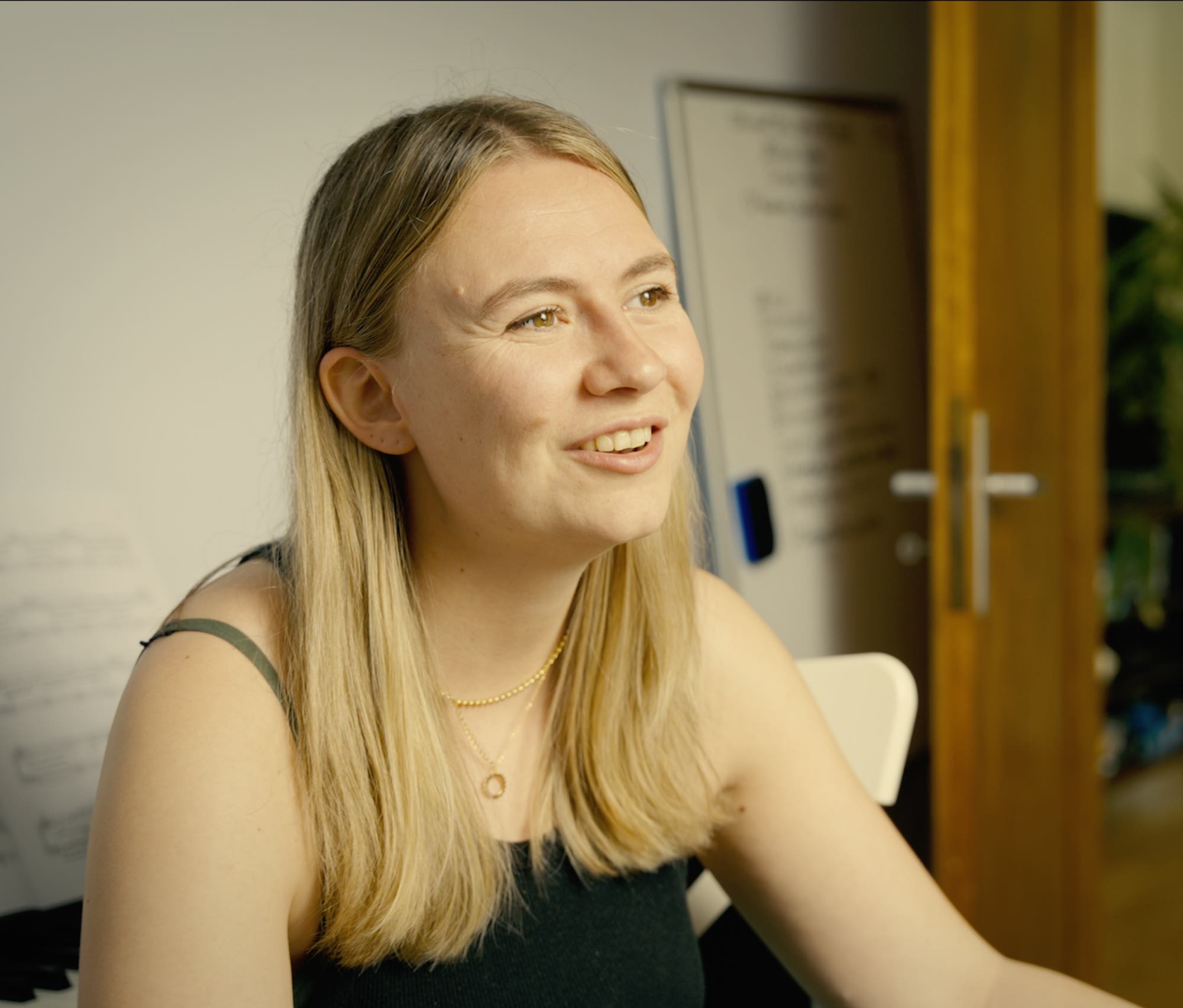
Nicool
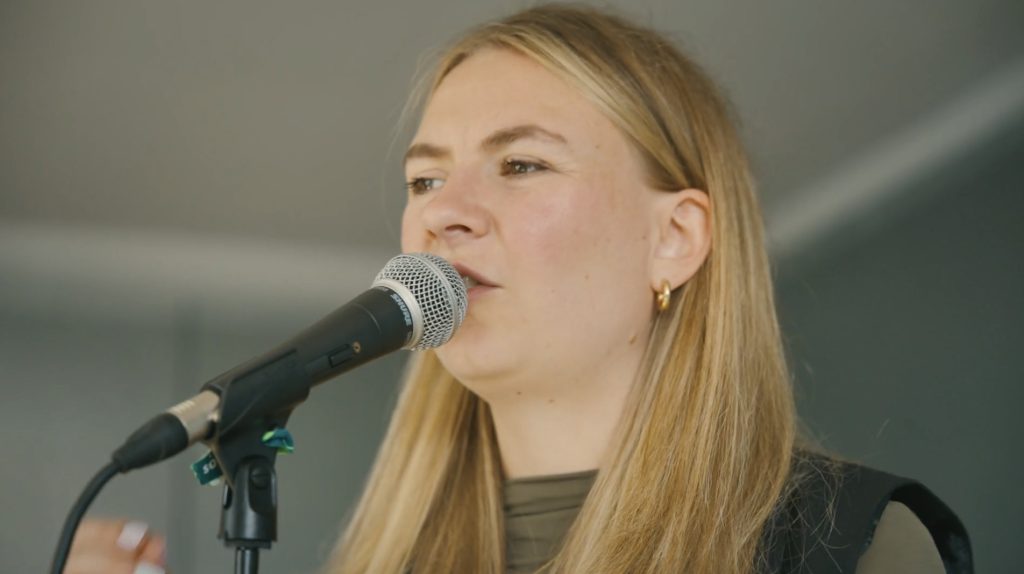
Stepping UP – Ee Portrait vum Nicool
Featured Music (in order of appearance):
De Sonnden Lyrics: Nicool Beat: MKO Mix & Mastering: Eric „Slunnes“ Slunecko Recording at Unison Studios Creative direction: Nicole Bausch, Danny Epstein & Nina Bodry Editing: Nina Bodry Camera: Alphonse Hatz Label: De Läbbel
Nikki Ninja ass do Text: Nicole Bausch Kompositioun: Pol Belardi
Eureka Text: Nicole Bausch Kompositioun: Pol Belardi
N vun der Welt Lyrics: Nicool Beat: Fuza Recording & Production: Fuza Mix & Master: Tom Gatti Camera and Direction by: Danny Epstein Edited by: XIO Vision Label: De Läbbel
Räppeldeng Text: Nicole Bausch Beat by Dennis Scholtes
Ech wëll Text: Nicole Bausch Kompositioun: Luca Sales
Nicool (Nicole Bausch, 1995) is a Luxembourgish rapper, a licensed psychologist and psychotherapist. She broke through in the local hip-hop scene with her debut album Den Ufank vum N [The Beginning of N (phonetically also: the end)] (2019). Although Nicool stresses that questions of gender are not the focus of her music, from our perspective gender does seem a key theme. Her 2023 song Wou ass d’Fra? [Where are the women?] may have been commissioned by the feminist organisation CID (Centre d’Information et de Documentation) | Fraen a Gender, but she was asked and she accepted for a reason. The reason may be exactly what she addressed in that song, namely structural sexism and gender-based discrimination in Luxembourg’s cultural sector, with testimonies collected from cultural practitioners.
Nicool uses one of rap’s most crucial elements: rhetoric. Rhetoric is one of the three central “R’s” of rap along with rhyme and rhythm, which are also equally present in Nicool’s work. The structure of rap itself is designed to persuade, to convince, to challenge, to engage: In Wou ass d’Fra? Nicool depicts the local cultural scene as a lively and fertile ground, where projects and ambitions bloom. But she keeps coming back to one key question: where are the women? The hook, “ech gesinn der schonn e puer / mee dat geet nach laang net duer / wou ass d’Fra?” [I see already a few / but that’s far not enough / where are the women?] neatly captures this sentiment. The song also raises broader questions about why the cultural sector remains so male-dominated, and the role of women but also non-binary and queer people within it.
Text: Cosimo Suglia; Curation of the webpage: Cosimo Suglia, Céline Schlesser, Sonja Kmec (upload 15 October 2026)
Culture is not produced in a vacuum; it requires many voices to create multiplicity and transcend institutionalised cultural canons. Essentially, Nicool’s argument is that while a male-dominated cultural sector may be able to churn out projects and artistic works, it cannot move forward or evolve in any meaningful way if diverse voices are not allowed to participate. In such situations, the production of culture reproduces homogeneity, and Nicool actively opposes this dynamic.
Equally important is her role in challenging stereotypes within Luxembourgish hip-hop itself. Rap is predominantly a male genre and the Luxembourgish scene is no different. Nicool’s presence within the scene is a challenge to such structures rather than an adoption of already established models. Her tackling of sexism and her position as a female rapper in Luxembourgish is a direct response to the current gender and representation debates.
Moreover, by choosing to address such themes in Luxembourgish she also complicates and challenges nationalistic assumptions about language, identity and cultural identity.
Text: Cosimo Suglia; Curation of the webpage: Cosimo Suglia, Céline Schlesser, Sonja Kmec (upload 15 October 2026)
Further evidence of the centrality of rhetoric in her artistic practice can be seen in Nicole’s second major persona Nikki Ninja. Nikki Ninja is based on Nikki Ninja & Afrobeathoven (2022), a project developed jointly with Dan Tanson, but has moved on to form together with Pol Belardi Nikki Ninja & d’Wibbeldidubs (cf. nikkininja.lu). The project purposely eschews stereotypical representations of violence and sexism that are often associated with commercial rap, instead creating a space where themes of friendship, inclusion, mental health and respect take center stage. Like Nicool, Nikki Ninja presents a brand of hip-hop and rap that is rooted in creativity and, perhaps more importantly, in community.
Nikki Ninja therefore subverts traditional gender stereotypes. Instead of reproducing women’s representations in rap as primarily sexualised objects of desire, whose power lies in taking back or utilising these stereotypes, Nikki Ninja creates a female protagonist whose power to shape her reality stems from creativity, playfulness and poetic language. As such, Nikki Ninja is not only a well-crafted role model, but also a potential pedagogical resource. The project seeks to engage young listeners with its messages, and in turn, to foster artistic exploration and self-expression.
Whether the artist is openly critiquing society or telling stories for younger audiences, her music invites listeners to look at themselves and to re-evaluate their own place in society. Challenging social norms – including gendered expectations – is not only a thematic concern in her work, but generates critical awareness. Nicole’s most recent project, Nicool & Luca Sales, is a collaboration with the Luxembourgish jazz musician Luca Sales, which combines his compositions with her lyricism, aiming at voicing and overcoming painful experiences.
Text: Cosimo Suglia; Curation of the webpage: Cosimo Suglia, Céline Schlesser, Sonja Kmec (upload 15 October 2026)


Trailer von Stolen Ground.
Theaterstück von Anna Leader (Autorin) und Richard Twyman (Regie) mit Musik von Nigji Sanges. Aufführungen im Théâtre des Capucins, Oktober 2024.
Youtube, hochgeladen von Les Théâtres de la Ville de Luxembourg (11.10.2024)

Trailer von Die Laborantin.
Theaterstück von Ella Road (Autorin) und Fábio Godinho (Regie) mit Musik von Nigji Sanges. Aufführungen im Staatstheater Mainz, November 2022.
Youtube, hochgeladen von Staatstheater Mainz (2.11.2022)


